 Connected Craftsman LLC
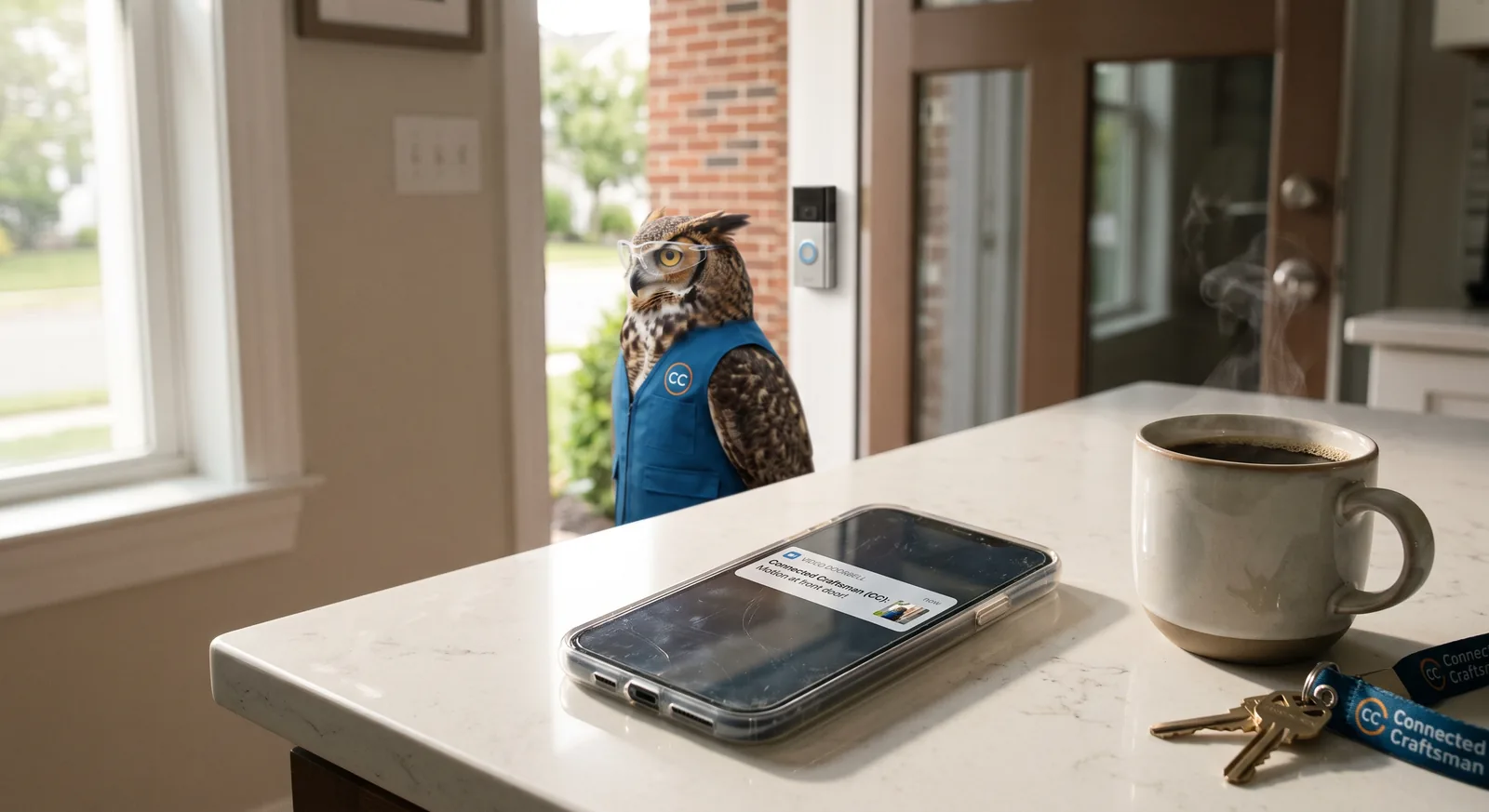
Most people, given the choice, want to stay in the home they know — the one where you've learned which stair creaks, where the morning light lands, where everything is exactly where you left it. Staying put as you get older isn't really a question of whether it's possible. For most homes, it's a question of what needs to change so the house keeps working for you instead of against you.
Here are the concerns that come up most often, and what generally helps with each.
1. Fall Risk
According to the CDC, falls are the leading cause of injury-related hospital visits for older adults, and most don't happen doing anything dramatic — they happen in bathrooms, on stairs, and in hallways that are just a little too dark. A wet tub floor, a loose stair rail, a hallway with one working lightbulb: these are ordinary conditions that add up to real risk.
The fixes are usually modest. Grab bars anchored into wall studs (not the suction-cup kind, which can fail under real weight) at the tub, shower, and toilet. Non-slip strips or mats on wet surfaces. Stair railings checked and re-secured if they wiggle. Better lighting in stairwells and hallways, including motion-sensor fixtures so there's no fumbling for a switch in the dark. None of this requires a renovation — it's the kind of work that gets done in an afternoon and quietly removes a lot of risk.
2. Losing Independence
Independence isn't only about physical safety. It's also about not needing someone else in the room every time you want to know who's at the door or whether it's locked for the night.
Smart home features can help preserve that sense of control without turning a home into a tech project. A video doorbell lets you see and speak to whoever's outside without crossing the house. A smart lock means no fumbling with keys in the rain, and confirms the door is actually locked from your phone. App- or voice-controlled lighting means you don't have to cross a dark room to turn on a light. These are small conveniences, but they add up to staying in charge of your own home.
3. Not Wanting to Be a Burden
This concern comes up more than almost any other — not wanting family to worry, or to feel like they need to check in constantly, or to drive over every time something breaks.
Routine home maintenance is the quiet answer here. Catching a loose handrail, a slow leak, or a smoke detector that's past its battery life before it becomes an emergency does a lot to ease that worry — for you and for the people who care about you. Connected smoke and CO detectors and simple, activity-friendly lighting can offer some added peace of mind too, without turning a home into a monitoring system. It's worth being clear-eyed here: none of this replaces an actual medical alert service or professional monitoring if that's genuinely what a situation calls for.
4. Trusting Who Comes Into the Home
Letting someone into your home — sometimes while you're there alone — is a reasonable thing to be careful about. It's worth asking any contractor for references, a clear quote before work starts, and a straight answer about who's actually going to show up.
A local, established business with a track record in the area is generally a safer bet than a one-off contractor found through an app, simply because there's more at stake for them in getting it right and being someone neighbors can vouch for.
5. Cost and Disruption
A full accessible bathroom remodel can run into the tens of thousands of dollars and take weeks — and for some homes, that level of work genuinely is what's needed. That's a real cost, and it shouldn't be minimized.
But most homes don't need to start there. A lot of meaningful risk reduction comes from smaller, targeted work: better lighting, secured railings, grab bars, a threshold ramp for a step or two, lever-style door handles instead of round knobs. A good first step is usually a walkthrough to sort out what's a real priority from what's simply nice to have, so any bigger decisions get made with actual information instead of guesswork.
Local Resources Worth Knowing About
Chester County has a couple of programs that specifically help fund this kind of work, and they're easy to miss if you're not already looking for them.
The Housing Partnership of Chester County — based right here in Downingtown — runs a Senior Citizen Home Maintenance Program that provides a one-time grant of up to $6,000 for home maintenance, repairs, and access modifications. It's open to homeowners 65 and older who own and occupy the property as their primary residence and fall within the program's income limits. Call 610-518-1522 for current eligibility details and an application.
The Chester County Department of Aging Services (610-344-6000) runs the OPTIONS Program for residents 60 and older — care management, home support services like housekeeping and transportation, Meals on Wheels, personal care, and personal emergency response systems, on a sliding co-pay scale based on income. It doesn't fund home modifications directly, but the same office's Family Caregiver Support Program offers a one-time grant of up to $5,000 for home modifications and assistive devices like ramps and grab bars if a family member is helping coordinate your care. Availability depends on current local funding, so it's worth a call to see what's open right now.
Program details like these change — funding runs out, income limits get updated, waitlists open and close. What's above was accurate as of September 2026, but confirm current eligibility and availability directly with the program before counting on it.
Know the Limits
None of this is a substitute for a professional in-home safety assessment, an occupational therapist's recommendation, or licensed medical monitoring — if a situation calls for that level of care, that's a different kind of help, and worth pursuing directly. What the fixes above address is the physical house itself: the everyday hazards and inconveniences that are often the easiest problems to actually solve.
If you'd like a second opinion on your own home, Connected Craftsman is happy to walk through it with you — no pressure, just an honest look at what would actually help.