 Connected Craftsman LLC
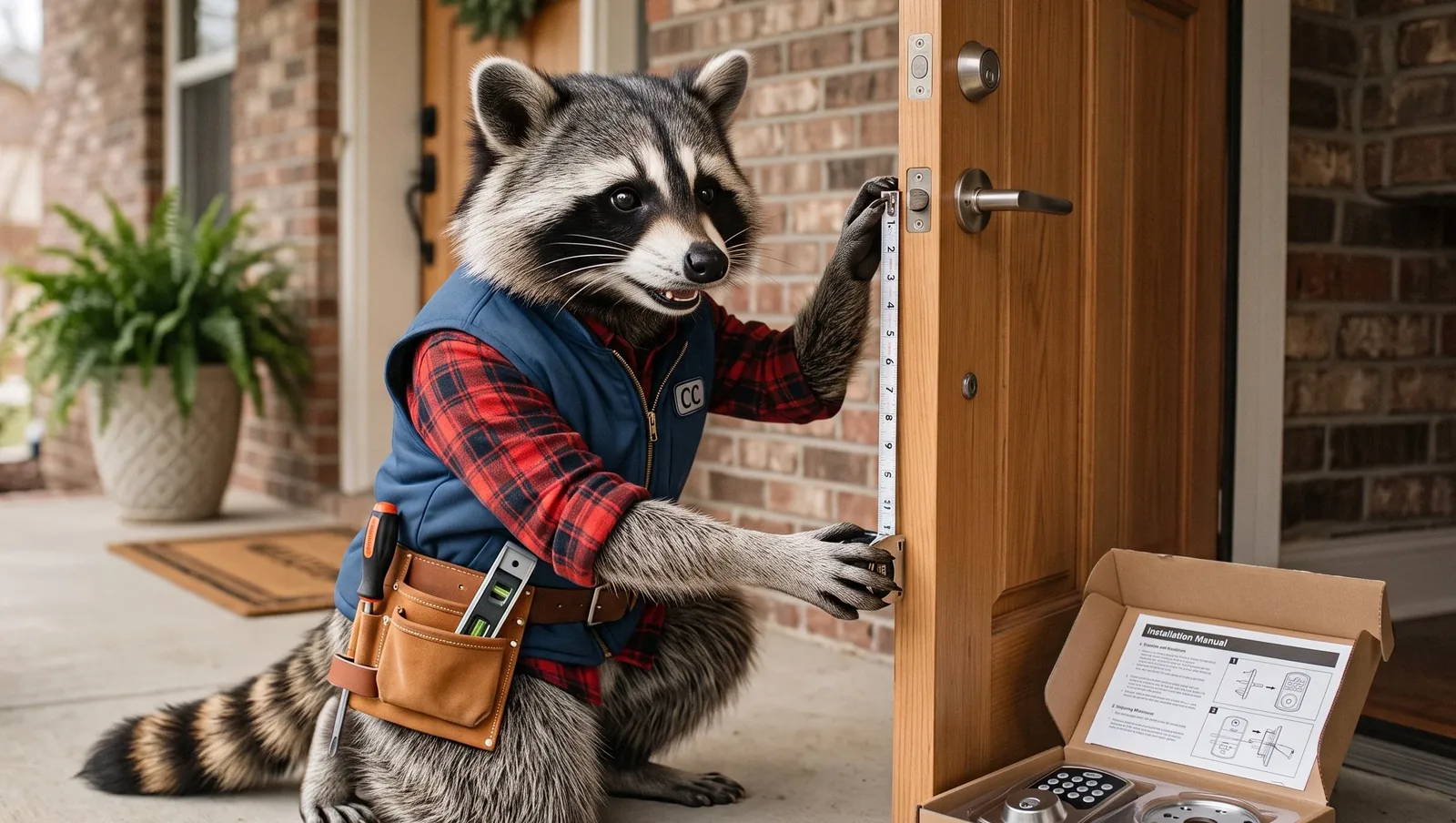
Three numbers decide whether the lock in the box will go on your door. All three take a tape measure and about two minutes.
The Three Measurements
- Backset: from the edge of the door to the center of the hole. It is either 2⅜ inches or 2¾ inches. Nearly every lock handles both, but it usually ships set to one of them and you have to change it.
- Bore hole: the big hole through the face of the door. Standard is 2⅛ inches.
- Door thickness: usually between 1⅜ and 1¾ inches. Thicker than that, and a solid or fire-rated door will need a different kit rather than more force.
The Test That Actually Matters
The thing that actually decides it, though, is not on that list.
Go outside, open the door, and throw the deadbolt with the door standing open. It should slide out smoothly with one finger. Now close the door and do it again. If you have to lift the door, lean on it, or give it a shove with your shoulder to get the bolt home — stop, and fix that first.
A manual deadbolt that binds is annoying. A motorized deadbolt that binds fails. The motor is small by design, and it will grind, drain batteries in weeks, report itself locked when the bolt is only half thrown, or strip. Every one of those reads as "the smart lock is junk," and the lock is fine.
The Fix Is Usually Free
The fix is usually the strike plate, and it is usually free. The bolt has worn a bright mark where it is catching — that mark tells you which way to move. Sometimes it is the hinge screws: swap the top hinge's short screws for three-inch ones that reach the framing, and a sagging door lifts back into square. Both of those are a screwdriver and twenty minutes — no professional needed for either one. See a real strike plate and mortise repair in our work gallery.
Before You Buy
- Keypad, key, or both. Keeping the key cylinder means a locksmith can still get you in and a neighbor can still use the old key. Losing it means one less thing to pick.
- How it talks. Bluetooth-only locks are fine standing at the door and useless from work. Wi-Fi in the lock eats batteries. Most of the good ones use a low-power radio and a small bridge plugged in nearby, which is the arrangement that tends to hold up.
- What happens when the batteries die, because they will. Look for external contacts you can touch a 9-volt battery to, or keep the key cylinder.
- Rental and guest codes. If the point is letting a dog walker or a cleaner in, check that the app does scheduled codes before you buy, not after.
- A glass storm door in front of it changes the summer temperature at the lock a lot. Worth mentioning to whoever installs it.
Multiple Locks, One House
Multiple locks on one house is where it gets worth having someone do it: matching the finish and the keyway, one app rather than three, one bridge in the right place, and every door tested. Five smart deadbolts and a video doorbell across one Coatesville house took two visits, and the second visit existed because the first one found doors that needed hanging properly before anything electronic went on them.
Locks, doorbells, or cameras — Connected Craftsman handles the install and the setup. Call or text (484) 699-0626 for a free estimate.