 Connected Craftsman LLC
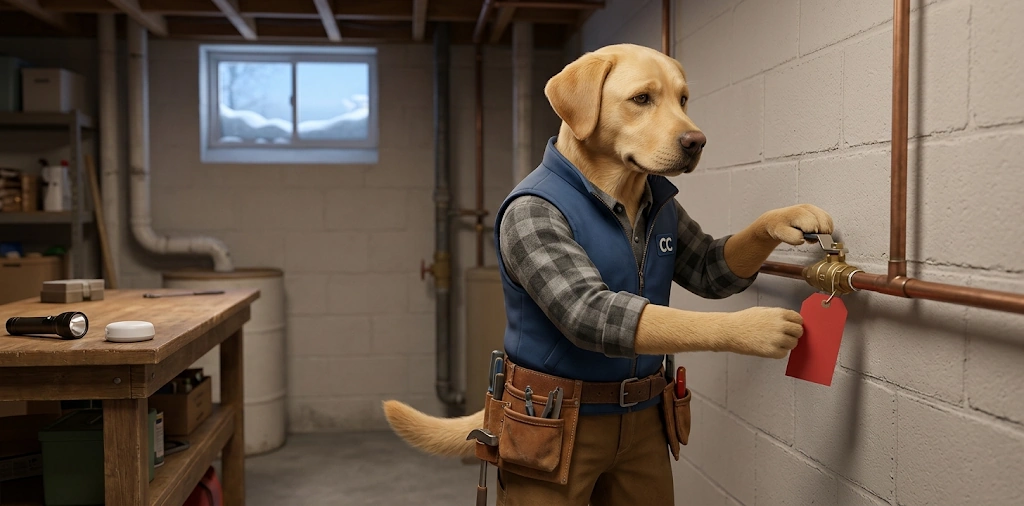
December around here is usually cold but forgiving. The nights that do the damage tend to come in January and February, the single-digit stretch after a week of mild weather when everyone has stopped thinking about it. A burst pipe is almost always found the morning after one of those nights.
None of what follows takes more than an afternoon. Most of it takes ten minutes. Here is what I would check this week, before the real cold arrives.
First: The Outside Faucets
Walk the outside of the house and make sure no hose is still attached to any outside faucet. This is the most common way a faucet freezes.
Many newer homes have frost-free faucets, the kind with a long stem that shuts the water off inside the warm part of the wall. They work, but only if the hose is off so the water can drain out. Leave a hose connected and the water trapped in the stem freezes anyway, and the split is inside the wall where you will not see it until the water does.
Older Downingtown and Coatesville houses often have plain outside faucets with a separate shutoff valve inside, usually in the basement near where the pipe goes through the wall. Close that inside valve, then open the outside faucet to let it drain, and leave it open for the winter.
Second: The Split-Level Problem Rooms
Split-levels, which a lot of 1960s and 1970s Downingtown and Exton neighborhoods are full of, have two spots that get cold first.
- The room over the garage. Its floor sits over an unheated space, and sometimes water lines for a nearby bathroom run through the garage ceiling. If that room is always the coldest in the house, the pipes near it are too. Keep the garage door closed on cold nights.
- The lower level against the outside walls. Pipes that run along an exterior wall in a partly below-ground level, or in a crawlspace, are the ones most likely to freeze. On the coldest nights, open the cabinet doors under any sink on an outside wall so the room's heat can reach the pipes.
If you have a room like this, a small plug-in temperature sensor that reports to your phone is a cheap way to find out how cold it really gets overnight, rather than guessing.
Third: Know Where the Main Water Shutoff Is
Before anything goes wrong, find the main shutoff valve, usually where the water line comes into the basement or utility room, and make sure it turns. A valve that has not moved in twenty years is sometimes stuck. Finding that out at 2 a.m. with water coming through a ceiling is the worst time.
Show everyone in the house where it is. Hang a tag on it if that helps.
Fourth: Drafts in Older Homes
Older homes with original doors and windows lose a lot of heat around the edges. Two quick checks:
- Doors. On a windy day, hold your hand near the edges of each exterior door. If you feel air, the weatherstripping is worn or the door has shifted. A new door sweep and weatherstripping is an inexpensive fix.
- Windows and outlets on outside walls. In older plaster houses, a cold draft from an outlet or switch on an exterior wall is common. Foam gaskets that fit behind the cover plate help, and they take a screwdriver and two minutes per outlet. Turn off the breaker first.
Fifth: Before You Travel
If you are away for a few days in January, do not turn the heat off or way down. The American Red Cross recommends leaving the heat set no lower than 55°F while you are gone.
This is where a smart thermostat earns its keep. You can check from wherever you are that the house is still warm, and most will send an alert if the temperature drops, which is the first sign the furnace has quit. Pair it with a couple of water leak sensors on the floor under the water heater, the washing machine and any sink on an outside wall, and the house can tell you about a problem while it is still a puddle.
When You Do Not Need to Hire Anyone
Taking the hoses off, closing the inside valve, opening the cabinet doors, finding the main shutoff, and adding door sweeps and outlet gaskets are all things you can do yourself this weekend.
If the main shutoff will not turn, an outside faucet drips with the inside valve closed, a room over the garage is always cold, or you want leak sensors and a thermostat that alert your phone set up together, that is the kind of job we do across Downingtown, Exton, West Chester and the rest of Chester County.